
The study evaluates four ionization schemes, bromide (Br⁻), superoxide (O₂⁻), protonated acetone (C₃H₆OH⁺), and hydronium (H₃O⁺), demonstrating how each provides complementary chemical coverage.
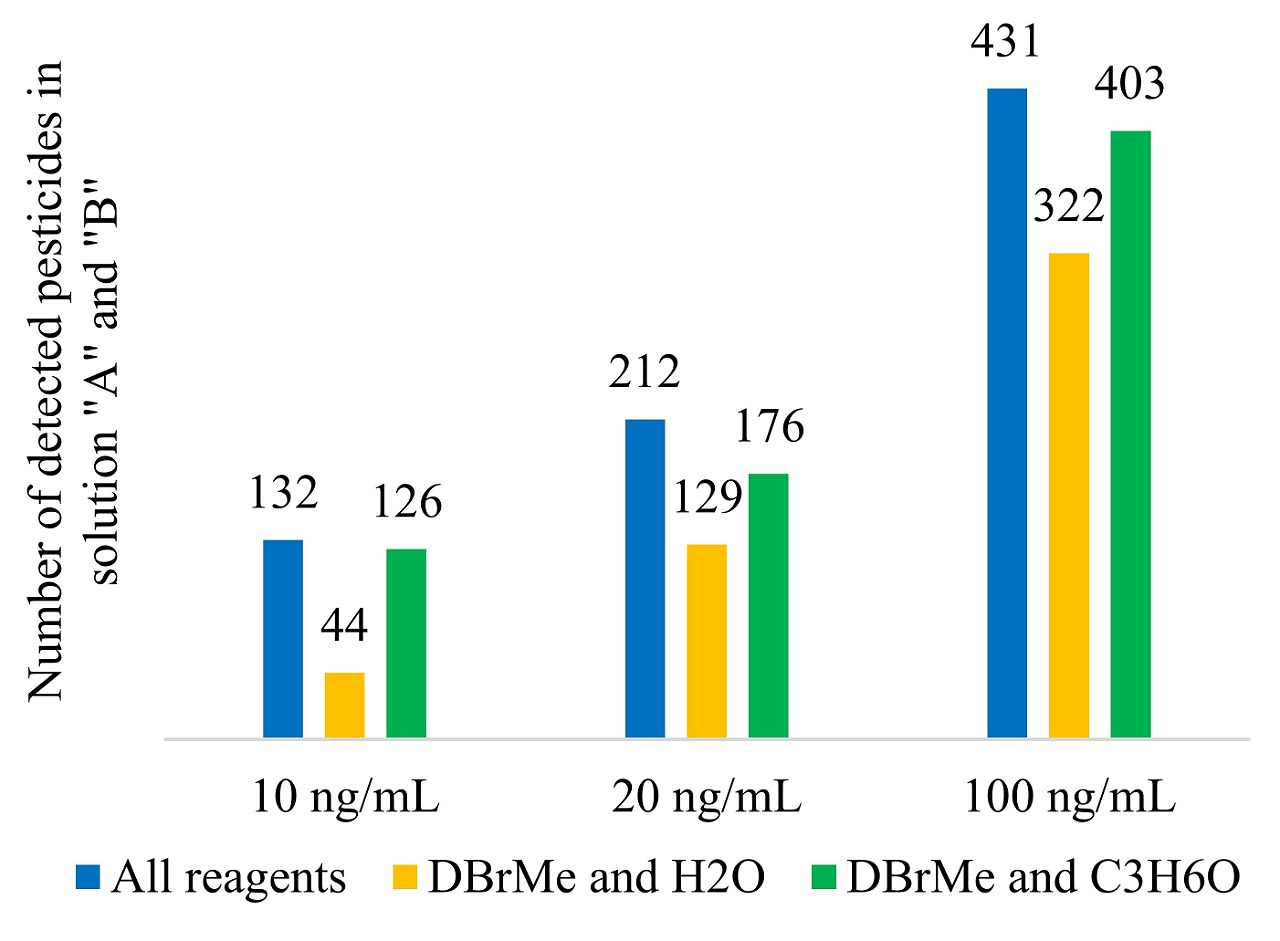
Experiments show that combining Br⁻ and protonated acetone ionization yields nearly the same detection coverage as using all schemes, emphasizing the efficiency of selective ion switching.
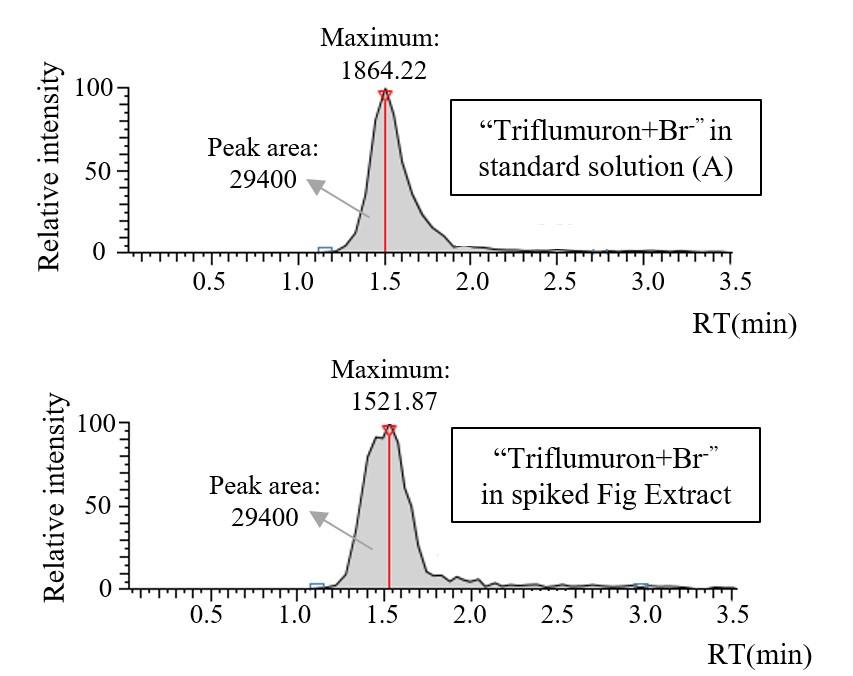
Matrix testing with spiked fig extract revealed a 96% detection match relative to standard solutions, confirming strong robustness in real-sample conditions.
Ten fruit extracts were analyzed and compared with validated Finnish Customs methods. While protonated acetone typically provided the broadest detection, both ionization modes captured key pesticides, sometimes matching reference concentrations. Variability between methods is attributed to storage effects, matrix composition, and differences in calibration materials.
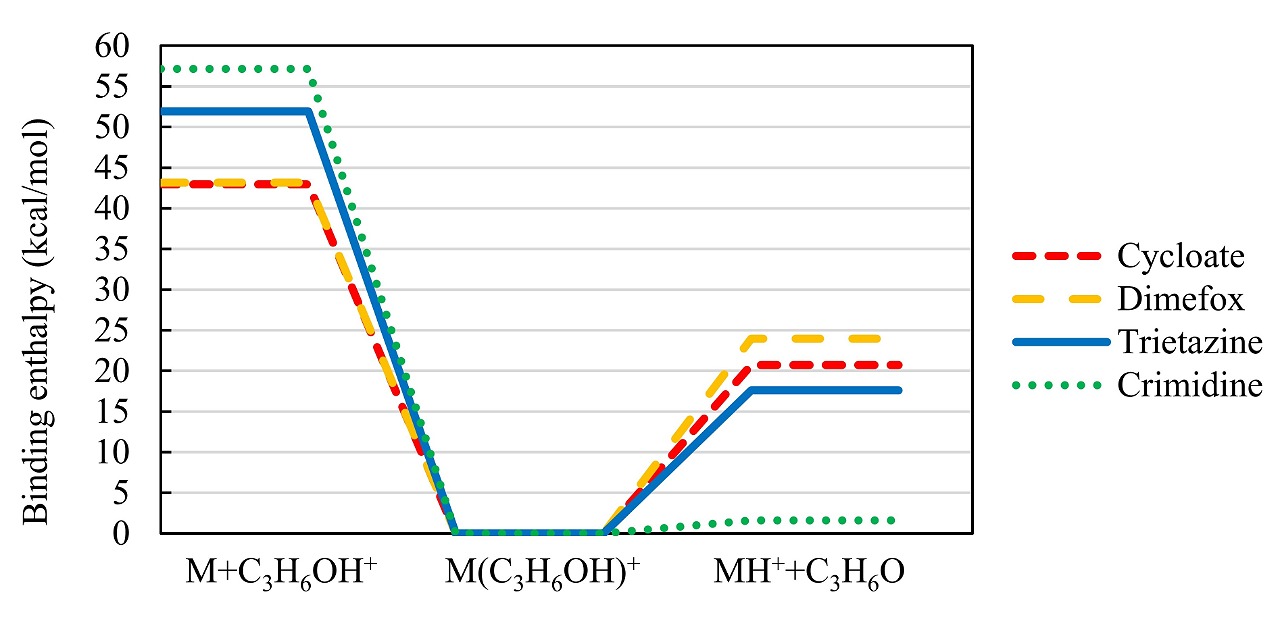
Quantum chemical calculations further elucidate adduct stability and fragmentation energetics, revealing that protonated pesticide formation is thermodynamically favored for all modeled compounds. However, adduct binding enthalpy alone was not sufficient to explain detection sensitivity, indicating that additional physical and chemical factors influence ion formation in TD‑MION‑MS.
Overall, the study demonstrates that MION‑MS offers versatile, rapid, and high‑coverage pesticide detection, capable of transitioning seamlessly across reagent ions and enabling improved screening performance compared to single‑ionization approaches.
Reference: Partovi, F., Mikkilä, J., Iyer, S., Mikkilä, J., Kontro, J., Ojanperä, S., Shcherbinin, A., & Rissanen, M. (2025). Ambient-Pressure Multischeme Chemical Ionization for Pesticide Detection: A MION-Orbitrap Mass Spectrometry Study. ACS Omega. https://doi.org/10.1021/acsomega.4c11287


